CLEWISTON, Fla. – A 12-state rivercane mapping project linking water quality improvement with tribal cultural preservation brought researchers from The University of Alabama’s Alabama Water Institute to Florida’s Big Cypress reservation in November.
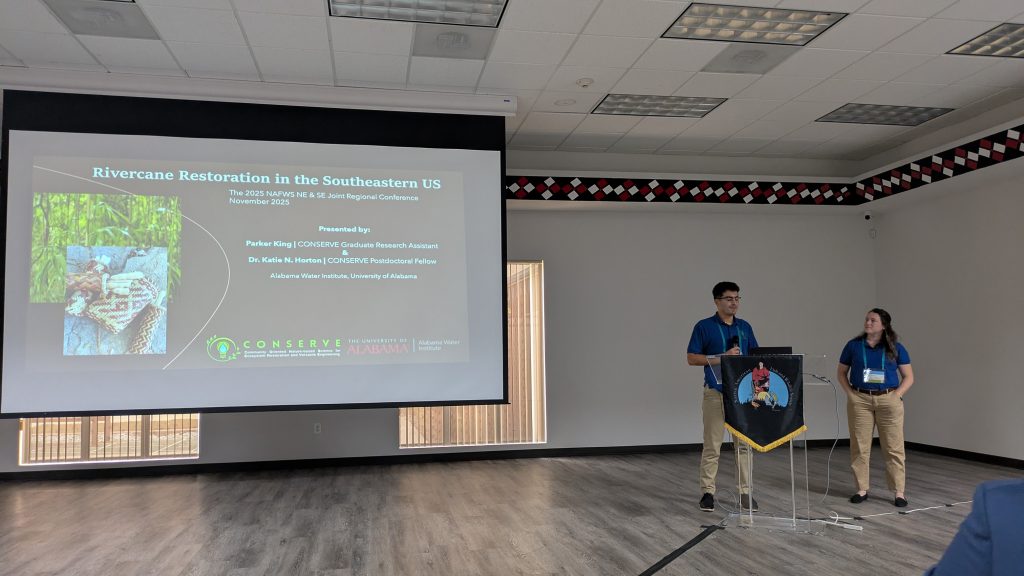
Parker King, a graduate research assistant, and Dr. Katie Horton, postdoctoral fellow, both with AWI’s Community Oriented Nature-based Science for Ecosystem Restoration and Versatile Engineering, or CONSERVE, presented at the Southeast and Northeast Joint Regional Meeting of the Native American Fish and Wildlife Society. The conference, hosted by the Seminole Nation of Florida, convened approximately 50 attendees to discuss wildlife conservation practices and emerging research in tribal resource management.
CONSERVE is creating a database of physical and genetic traits to help southeastern tribes locate rivercane stands of the correct maturity and size for conservation and restoration efforts. The intimate conference format with fewer attendees created opportunities for deeper engagement than larger scientific meetings typically allow.
A Cultural Keystone Species
CONSERVE’s presentation served dual purposes depending on audience familiarity with the native bamboo species. For attendees from northeastern states, where giant rivercane is not found naturally, the team introduced rivercane as a restoration option. For southeastern tribal representatives, the presentation focused on CONSERVE’s genetic database project and partnership opportunities.
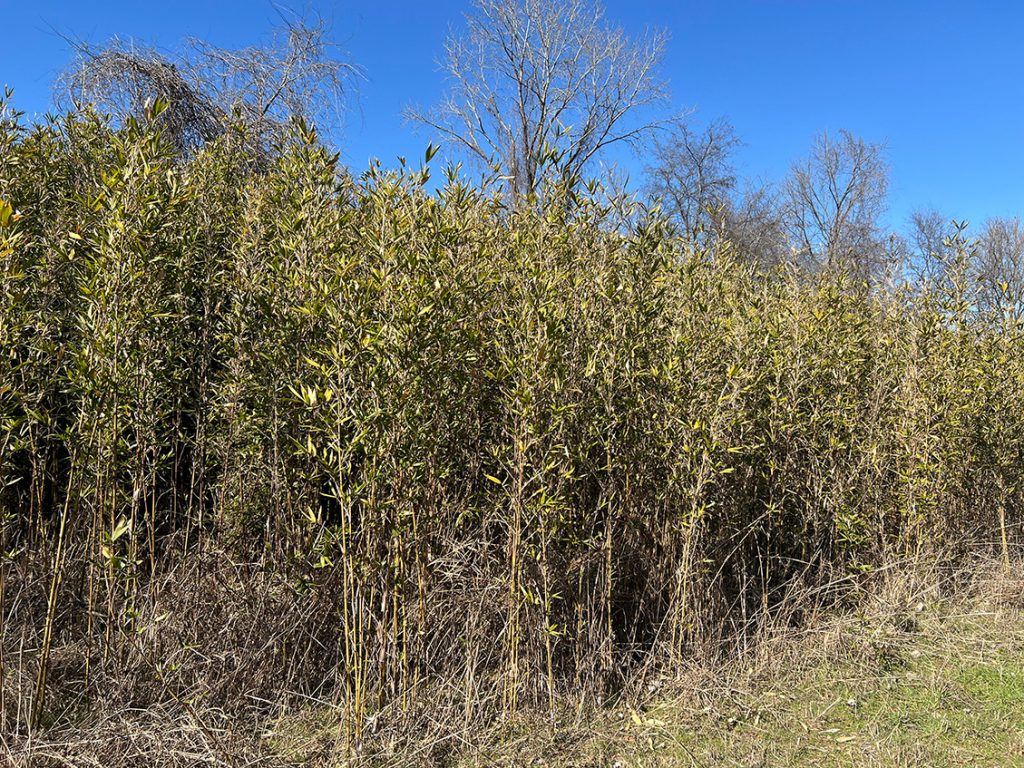
“Many tribes from the Southeast rely on rivercane for construction, basket weaving and even blowguns and arrows,” King explained. “Because of its importance, it is considered a cultural keystone species.”
The plant serves two roles. Ecologically, it supports entire ecosystems, with its removal causing cascading environmental impacts. Culturally, southeastern tribes including the Choctaw, Chickasaw and Creek nations rely on rivercane for traditional practices that have sustained their communities for generations.
Mapping a Solution
The project aims to address a longstanding challenge for tribal governments and communities alike. CONSERVE is creating a comprehensive database of physical traits, genotypes and environmental conditions everywhere that rivercane grows. As part of this database, rivercane locations will also be mapped across 12 southeastern states to support the restoration of both ecosystems and cultures.
“We’re hoping to create a database of rivercane in the Southeast and share it with tribes so that when they use it for cultural practices, they know where it is available and mature enough to use,” King said. “That’s historically been a struggle.”
The project is working with tribal partners to identify and record relevant physical traits while surveying 400 rivercane populations across diverse environments. Experts from the tribes will assist with selecting populations of interest and even surveying certain populations. In return, CONSERVE is training and supporting three tribal employees to build tribal capacity for rivercane restoration and management efforts on Indigenous lands. All data collected and conclusions drawn from the project will be shared directly with the tribes.
“This project is unique because it’s entirely coproduced with our tribal partners to meet their needs and priorities,” Horton said. “All the data we collect, all of the conclusions we draw, will be going back to them directly to support their relationship with, and their management of, land and water systems.”
Horton is developing protocols for every part of the project from field safety to data collection and processing. The work will utilize highly accurate GPS equipment to map rivercane locations throughout the region as well as other resources, such as CONSERVE’s state-of-the-art genetics equipment and UA’s High Performance Computing and Data Center.
Building Partnerships Across State Lines
The presentation generated substantial interest, with multiple partnership commitments secured before the conference concluded. A resource manager from Texas volunteered both survey locations and genetic samples. Researchers connected with a former Mississippi Band of Choctaw Indians employee who showed interest in coordinating access to managed stands. The Eastern Band of Cherokee Indians’ conservation biologist, already a project partner, expressed renewed commitment following the presentation.
King noted that several attendees remembered CONSERVE executive director Dr. Michael Fedoroff’s previous presentations at annual conferences hosted by different organizations across the Southeast, and some had participated in Rivercane Restoration Alliance events hosted by CONSERVE.
Beyond Cultural Restoration
Following the conference, researchers participated in cultural field experiences to strengthen their understanding of Seminole history and land relationships. These learning opportunities support CONSERVE’s commitment to partnerships rooted in respect for tribal knowledge and cultural priorities.