
TUSCALOOSA, Ala. — A process that once required two full days of hands-on work by a researcher and graduate student now takes about an hour.
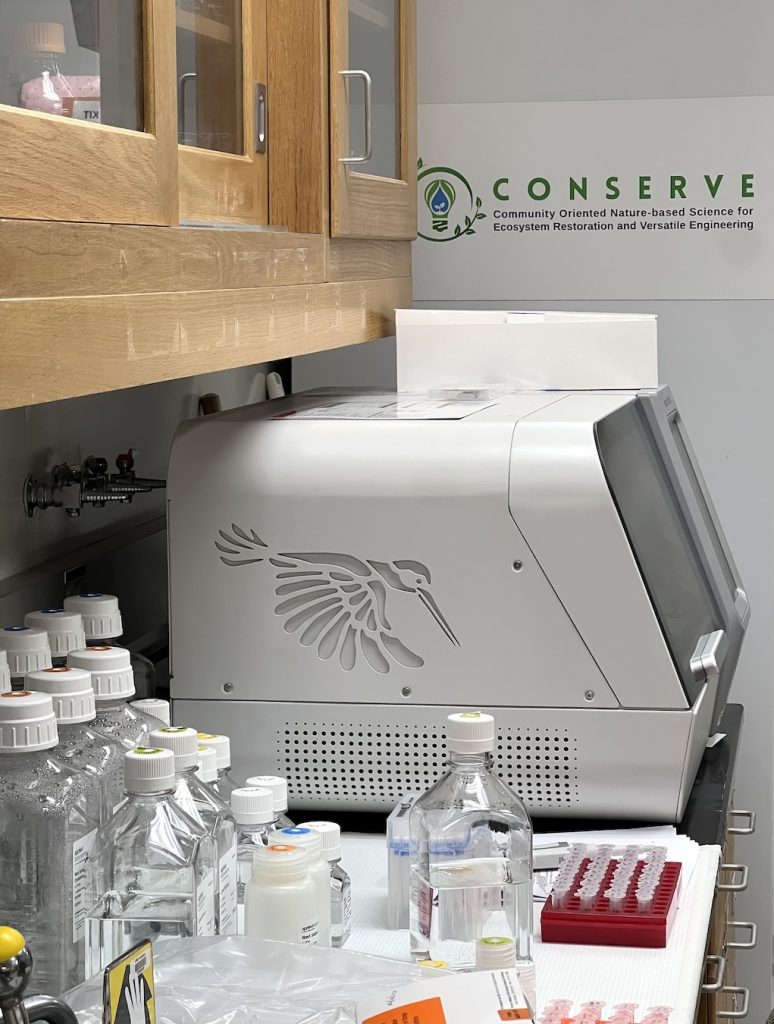
The Alabama Water Institute’s Equipment Support Program recently helped fund a Thermo Scientific KingFisher Apex for its CONSERVE Future Ecologies lab. The state-of-the-art genomics platform automates the extraction of DNA, RNA and proteins from plants, animals and environmental samples, dramatically accelerating laboratory workflows.
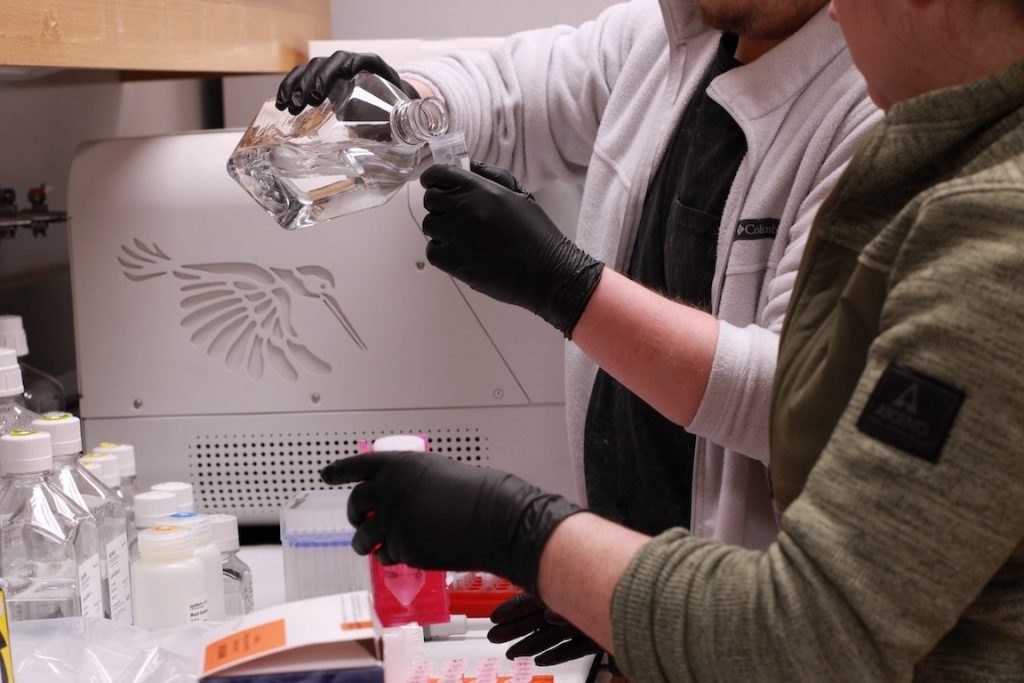
The investment marks the first equipment of its kind at The University of Alabama, expanding campus-wide genomics capacity, strengthening the University’s ability to compete with leading research institutions and creating new hands-on training opportunities for the next generation of water scientists.
Accelerating Discovery
“The KingFisher allows researchers to capture what we all want, which is more time,” said Dr. Michael McKain, CONSERVE Future Ecologies director, associate professor in the Department of Biological Sciences and curator of the UA Herbarium. “It is not only our ability to do the work of generating data; it’s our ability to consider the data, discuss the results with others and present our findings to the larger community.”
The equipment processes up to 96 samples simultaneously in approximately one hour. The traditional manual method required grinding frozen material with liquid nitrogen in a mortar and pestle, then spending days working with chemicals to break down cells and extract DNA, a process that yielded only a few samples at a time with a lot of labor.
Positioning UA for Larger-Scale DNA Research
The KingFisher Apex uses magnets and specialized beads to extract DNA, RNA and proteins from diverse species. The automated system reduces labor intensity while often producing higher quality and more consistent results than manual methods.
The equipment handles recalcitrant samples, organisms with challenging biochemistry that often failed with traditional methods, with greater success rates. This alone expands the range of species UA researchers can study.
“It has so much potential to raise up our research profile amongst not only researchers, but with industry, governmental entities and the public,” McKain said, “and show that we are a serious entity that does environmental-based genomics asking big questions that have real consequences in people’s lives.”
Equipment Opens Door to Full Ecosystem Analysis
For CONSERVE’s rivercane restoration project, the time savings translate to practical research capacity. Dr. Katie Horton, CONSERVE postdoctoral fellow, will work with co-principal investigators McKain and Dr. Michael Fedoroff to lead analysis on approximately 4,000 rivercane samples from roughly 400 populations across 12 southeastern states to understand genetic variation between populations.
“With the equipment, what used to take a year could now be accomplished by a couple of people in a month and a half,” McKain said. “You’ve just got to go find the specimens.”
But the equipment’s versatility extends far beyond a single species, opening pathways for comprehensive ecosystem analysis.
“If we want to go out into nature, into a watershed, and say we’re interested in every critter that lives inside this creek — because we want to understand how they’re interacting with each other, to then understand the impact that the ecosystem has on the communities around it, on farmers, on the economy,” McKain said, “this equipment helps us get that information.”
Through CONSERVE’s Future Ecologies program, researchers are developing methods to integrate full ecosystem genomics with geological history and artificial intelligence modeling to better estimate environmental impacts and changes over time.
Cross-Department Commitment
The collaborative funding model demonstrates commitment to building research infrastructure across departments. Dr. Steve Thomas at the Center for Freshwater Studies and Dr. Kevin Kocot in the Department of Biological Sciences contributed to the purchase alongside CONSERVE’s National Fish and Wildlife Foundation America’s Ecosystem Restoration Initiative grant.
The first of several training sessions was held in November 2025. Future training sessions will bring together researchers working on diverse projects, from rivercane restoration to mollusk genetics to freshwater algae studies.
Educating the Next Generation
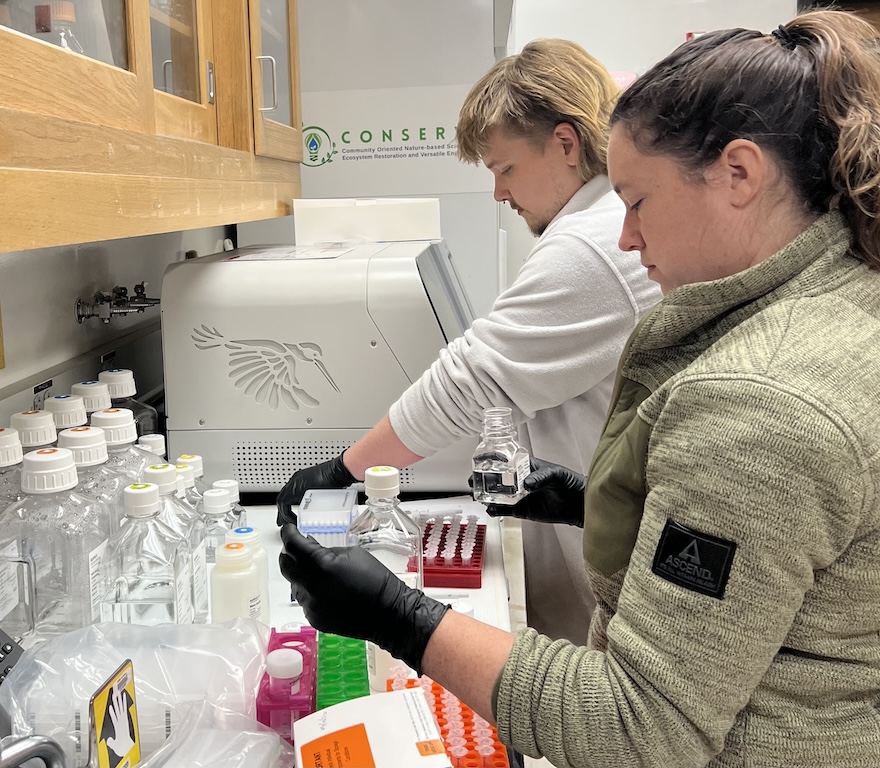
Beyond time savings, the CONSERVE Future Ecologies lab provides graduate students with hands-on experience with technology many universities lack.
“Many of our students aren’t going into academia,” McKain said. “They’re going to go into federal jobs, federal labs if they’re in biology or maybe private industry. If they’re already acquainted with this type of equipment and they’ve ran it, not only do they have experience using it, they’re also more likely able to troubleshoot ideas around it. It makes them more competitive for jobs.”
The equipment also enables undergraduate research at scale, allowing students to contribute to substantial data collection early in their academic careers while working in safer conditions than traditional manual extraction methods.
Access for UA Researchers
CONSERVE is developing protocols for UA researchers to schedule time in the Future Ecologies lab to utilize this type of state-of-the-art equipment. Interested researchers can contact McKain as the process takes shape.
Alabama’s watersheds hold nationally recognized ecological diversity, with unique plants and animals found nowhere else in the world. The CONSERVE research group at The University of Alabama, along with its collocated partners including NOAA, USACE, National Water Center, USFWS and USGS, works to deliver nature-based watershed conservation practices that enhance all communities depending on healthy watersheds.
The Alabama Water Institute (AWI) is one of The University of Alabama’s four research institutes. AWI acts as a forum for interdisciplinary research and education by bringing together university researchers, students, and staff to foster collaboration and a broad interdisciplinary focus on water issues that face our world today. AWI-affiliated researchers specialize in hydrologic and hydraulic modeling, water security and quality, remote sensing, biodiversity and watershed management, and human health through synergies with AWI research programs, including the NOAA Cooperative Institute for Research to Operations in Hydrology, the Global Water Security Center, and the CONSERVE Research Group.