
Two researchers affiliated with the Alabama Water Institute, or AWI, have been selected to receive Fulbright awards through the 2026-2027 Fulbright U.S. Scholar Program. They will contribute to global water sustainability efforts through research and teaching.
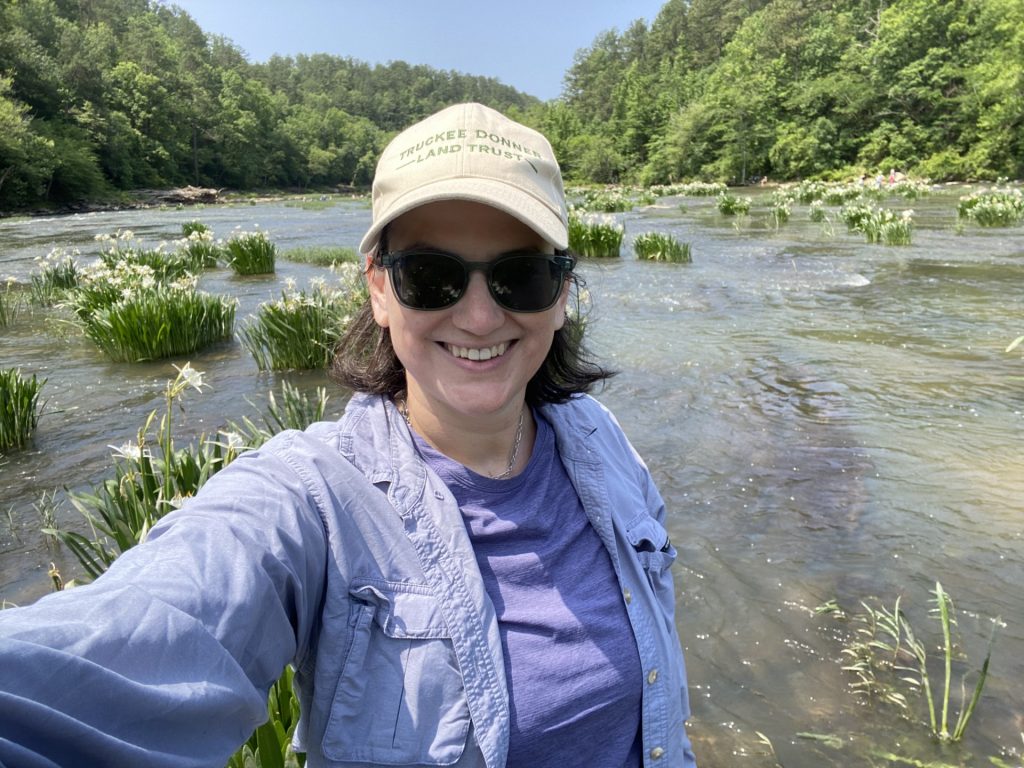
Dr. Kate Brauman is the deputy director of the Global Water Security Center, or GWSC, a research entity under AWI dedicated to delivering water intelligence to inform national and international security. Awarded the Fulbright Canada Research Chair in Water at McGill University in Montreal, Quebec, Canada, Brauman will conduct research developing robust intellectual linkages between ecosystem services, water resources and national security.

“People are beginning to talk about these connections, but often only in very general terms. What I really want to do with these four months is have the time to figure out what that means exactly,” Brauman said. “I want to find out when it is just talk and when there is a real, meaningful connection that can support our analysis and management.”
Dr. Glenn Tootle, professor in the Department of Civil, Construction and Environmental Engineering and affiliated faculty member at AWI, was awarded the J. William Fulbright Research Scholar Award. His focus will be on exploring paleohydrologic solutions to the extreme drought in Slovakia through his work with the Slovak Academy of Sciences’ Institute of Hydrology in Bratislava, Slovakia.
“The Europeans are very advanced in hydrology. But one of the big gaps they had not really explored was paleohydrology, specifically going back in time using tree ring data and saying, ‘We know what the last 50 or 100 years looked like, but what did conditions look like 500 to 1,000 years ago?’” Tootle said. “We can expand that knowledge to where we can provide skillful information to support strategic planning for future droughts.”

Connecting the Dots on Global Water Challenges
Although Brauman and Tootle are studying different questions in different parts of the world, both research projects share a common goal of generating knowledge that helps societies better anticipate and respond to complex water challenges.
Tootle received his first Fulbright award in 2021, serving as a Teaching and Research Scholar at Università di Trento in Italy. His research focused on paleohydrologic reconstructions of historic droughts to better inform future water planning and management. During his time there, Italy was experiencing what was considered one of its worst droughts according to the instrumental record. However, working with faculty collaborators in the Po River Basin, Tootle and colleagues uncovered findings that highlighted the value of looking beyond the instrumental record.
“What we found basically is that the 20 or so years of the 21st century were the driest they’ve seen in probably 500 years,” Tootle said.
Building on that work, Tootle will conduct similar research in Slovakia for his second Fulbright, expanding the approach to watersheds across the country. By reconstructing centuries of drought history, the research will provide water managers and planners with a much longer perspective for preparing for future droughts, offering them the opportunity to ask questions like:
“If that drought happened today, how would we adjust?” Tootle said. “How would we modify our drought management plans? How would we manage water? What would this mean for our dams, hydropower, agriculture, recreation, fisheries, environmental flows and all other competing water demands?”
While Tootle’s research focuses on improving drought preparedness through historical records, Brauman’s work considers the broader influence of the natural environment on national security.
“There’s a real desire and need to understand how the natural environment affects people, and national security is one important dimension of that,” said Brauman.
Her project will take on this task, investigating the connections between nature, water and national security to inform better environmental management decisions.
“The challenge is deciding which environmental management actions matter most. We can’t do everything,” Brauman said. “Instead, we need to understand how to live alongside nature in more positive ways and determine how to measure, manage and prioritize nature’s effects on people, particularly in relation to national security.”
Strengthening Transnational Water Collaboration and Expertise
For more than 75 years, the Fulbright Program, the U.S. government’s flagship international educational and cultural exchange program, has supported global collaboration by providing students and scholars from more than 160 countries opportunities to conduct research, teach, exchange ideas and foster mutual understanding. Through these exchanges, Fulbright fosters international collaborations that bring together researchers and institutions across borders to address complex global challenges, including those related to water.
“A big part of this award is the opportunity to spend time at another institution and work alongside different colleagues and organizations who bring different insights into these problems,” Brauman said. “I’m particularly excited that McGill has the Brace Water Center, which like AWI is a ready-made platform connecting me with people doing exciting water work across the university.”
In Montreal, Canada, where Brauman’s work is centered, she expects to connect with organizations working at the intersection of environmental change and global security.
“One of those [organizations] is NATO’s Climate Change Centre of Excellence, and I’m really excited to connect with them to explore the security dimensions of my work,” Brauman said. “The Secretariat for the Convention on Biological Diversity is also based in Montreal, and I’m also excited to connect with them for the nature side of my work.”
Then there is Tootle’s paleohydrology research in northern Italy that has expanded into a broader European collaboration, sparking partnerships across the continent.
“Basically, the weeds grew all across Europe,” Tootle said. “I went from Italy to Slovenia, to Serbia, to Slovakia. To add to it, we just got published in Austria. So now we’ve done work in five countries where we’ve completed paleohydrology research.”
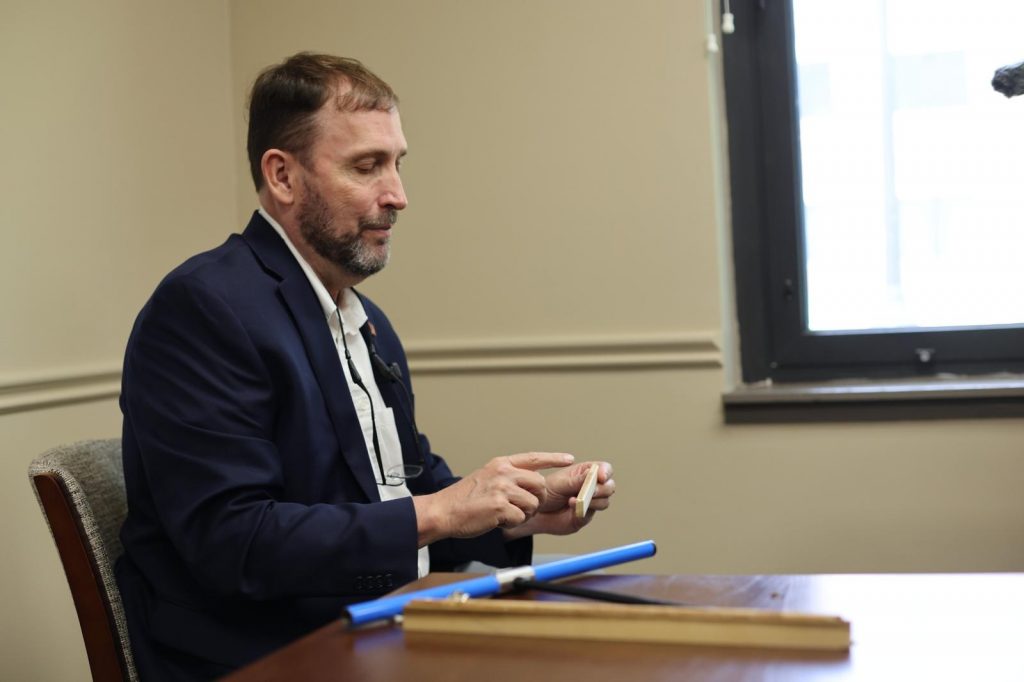
Students are also central to these international collaborations. In addition to teaching classes in paleohydrology and hydroclimatology at the Università di Trento during his first Fulbright, Tootle now takes The University of Alabama’s study abroad program he has led since 2013 to Italy. He hopes to continue those teaching opportunities in this current assignment, as he develops a new study abroad program focused on artificial intelligence.
“The hope is that we’ll be able to take students there in 2028,” Tootle said.
Toward a Water-Secure Future
For both researchers, the Fulbright is about more than conducting research abroad. It is an opportunity to build relationships that will continue long after the assignment ends.
“My major goal with Bratislava and the Slovak Academy of Sciences’ Institute of Hydrology is to build a relationship that doesn’t end when I step off the plane next year,” Tootle said. “I want to develop a relationship that can eventually be passed on to other faculty once I retire.”
It is also an opportunity to exchange ideas and generate knowledge that will inform future approaches to water management and security.
“At GWSC, we’ve already begun doing excellent work demonstrating the specific mechanisms that connect water and national security,” Brauman said. “By entering these spaces, I get to help people understand those connections and encourage more informed approaches to environmental management and national security.”
Through these partnerships, both Brauman and Tootle have the chance to advance research that will help shape a more water-secure future.
“I’m really excited about this,” Brauman said. “I think it has the potential to create meaningful impact.”
The Alabama Water Institute is one of The University of Alabama’s research institutes. AWI acts as a forum for interdisciplinary research and education by bringing together University researchers, students and staff to foster collaboration and a broad interdisciplinary focus on water issues that face our world today. AWI-affiliated researchers specialize in hydrologic and hydraulic modeling, water security and quality, remote sensing, biodiversity and watershed management and human health through synergies with AWI research programs, including the NOAA Cooperative Institute for Research to Operations in Hydrology, the Global Water Security Center and the CONSERVE Research Group.