TUSCALOOSA, Ala. — The Alabama Water Institute has selected three faculty members from The University of Alabama to serve as 2026-29 fellows in the AWI Faculty Fellowship Program.


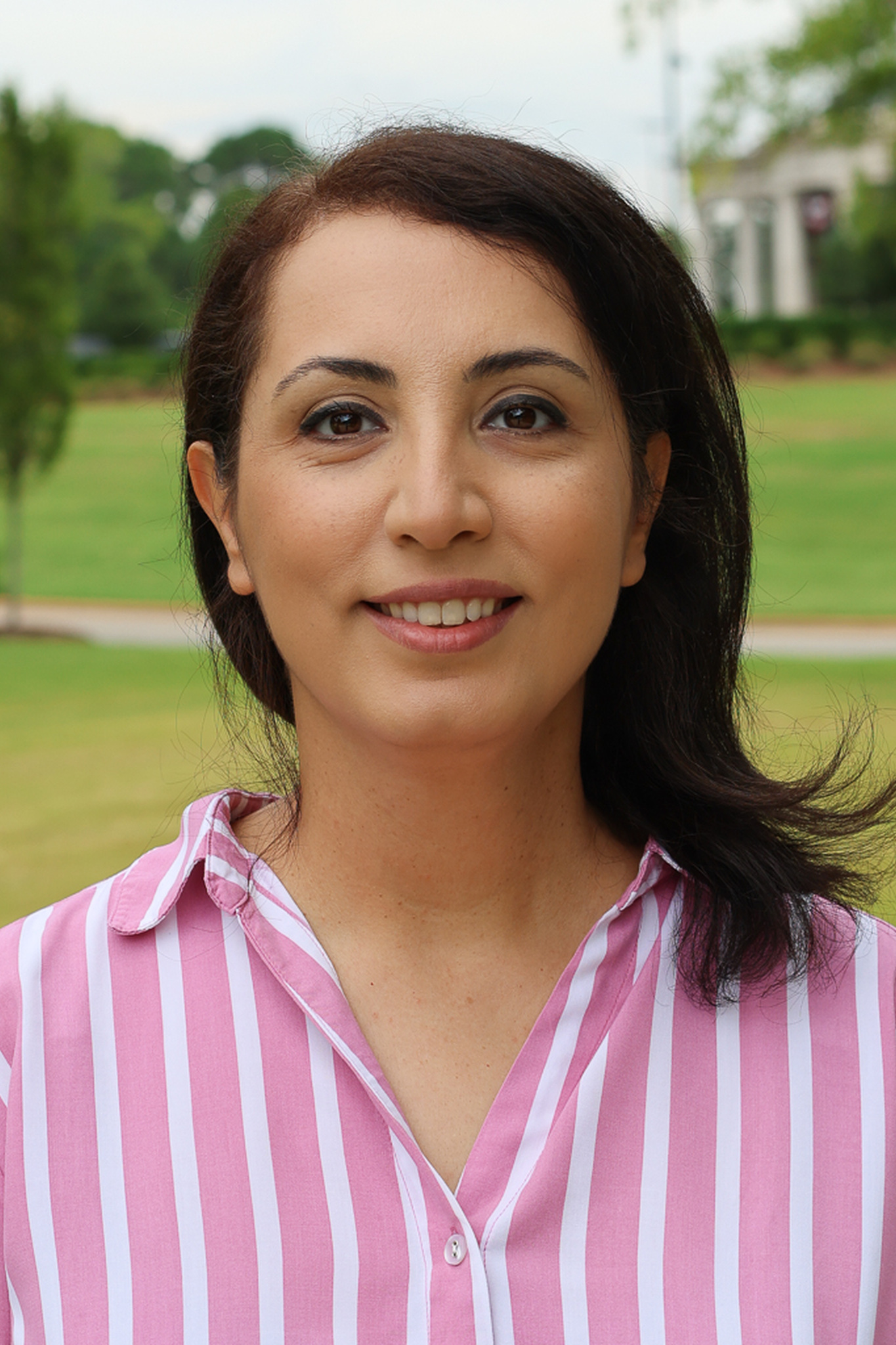
The program recognizes UA faculty for research, extension and education programs that advance UA’s interdisciplinary water-related communities of science. This year’s fellows represent two of AWI’s research entities: the Cooperative Institute for Research to Operations in Hydrology, or CIROH, and the CONSERVE Research Group.
CIROH Fellow: Dr. Amobichukwu Amanambu
Dr. Amobichukwu Amanambu, assistant professor of geography, combines hydrology, geospatial technologies and artificial intelligence in his research.
“I am excited about the AWI Faculty Fellowship,” Amanambu said, “because it will help me connect several areas of my research: hydrological drought and low flows, the water demands of AI infrastructure, the effects of extreme events on energy infrastructure and better ways to design water-observing networks for inland flooding.”
Over the next three years, Amanambu hopes to develop practical tools, create new research and learning opportunities for students and build stronger collaborations with CIROH, federal agencies, industry and other researchers.
“As water conditions and demands become more difficult to predict, my goal is to produce science that helps water managers and communities make better decisions,” Amanambu said.
CIROH selected Amanambu for the hydrology and artificial intelligence expertise he brings to its research-to-operations mission.
CIROH Fellow: Dr. Peishi Jiang
Dr. Peishi Jiang, assistant professor of civil, construction and environmental engineering, is a trained hydrologist and data scientist. His research analyzes watershed systems through hybrid physics-AI approaches, drawing on hydrological modeling and data science methods such as deep learning, information theory, causal inference and data assimilation.
“This fellowship offers a valuable opportunity to extend my expertise to broader and emerging hydrological challenges across integrated climate, energy and water systems,” Jiang said. “It will also enable me to learn new techniques, such as quantum computing, and explore their potential in addressing these challenges.”
Jiang said he is truly excited about this opportunity to become more deeply integrated into the broad CIROH community and collaborating more closely with CIROH partners to address emerging water-related challenges.
CIROH selected Jiang for the data science and modeling expertise he brings to water prediction.
CONSERVE Fellow: Dr. Mojdeh Rasoulzadeh
Dr. Mojdeh Rasoulzadeh, associate professor of mathematics, works at the interface of applied mathematics, fluid mechanics and scientific computing. Her research focuses on multiscale modeling of flow and transport in complex, microstructured porous media. She develops mathematical and computational frameworks that connect pore-scale phenomena to field-scale behavior.
Her work includes groundwater flow and contaminant transport, coupled multiphysics problems, fluid-solid-particle interactions, microplastic transport and subsurface energy storage.
“I have been collaborating with the CONSERVE Research Group since fall 2025,” Rasoulzadeh said. “It has been a wonderful experience to be involved in such a broad range of research projects and interdisciplinary collaborations. I am excited to continue this journey, explore new research opportunities and contribute to the group’s efforts to address water-related challenges facing communities.”
CONSERVE selected Rasoulzadeh for the mathematical modeling expertise she brings to its research projects.
Advancing Water Science Through Collaboration
The 2026-29 fellows bring expertise spanning hydrological drought, geospatial artificial intelligence, data science and multiscale modeling. All three were selected for their expertise and potential to advance cutting-edge research that addresses critical water challenges facing communities. Their work supports CIROH’s national mission of moving hydrological research into operations and CONSERVE’s regional work with communities, building impactful projects that benefit both the University and society. Each fellowship lasts three academic years and includes an annual stipend.
The Alabama Water Institute is one of The University of Alabama’s research institutes. AWI acts as a forum for interdisciplinary research and education by bringing together University researchers, students and staff to foster collaboration and a broad interdisciplinary focus on water issues that face our world today. AWI-affiliated researchers specialize in hydrologic and hydraulic modeling, water security and quality, remote sensing, biodiversity and watershed management and human health through synergies with AWI research programs. AWI’s research entities include the Global Water Security Center, the NOAA Cooperative Institute for Research to Operations in Hydrology, the CONSERVE Research Group and the CRIMSON Water Initiative.